
12 Research Backed Gamification Ideas for Course Creators
Research backed toolkit for educators: 12 ready to use gamification ideas, APAR aligned templates, and quick ways to measure pilot results.
By the Hopper team
Progress maps, quests, XP systems, and badges can raise course engagement, but only when the mechanic maps directly to a learning objective. Loose gamification, badges for showing up, points for nothing in particular, tends to fade fast. This article walks through twelve ready-to-use course gamification ideas, the research behind them, and a simple way to measure whether any of it worked.
TL;DR:
- Gamification should directly connect mechanics like quests, badges, and leaderboards to specific learning objectives, avoiding superficial or arbitrary rewards.
- Implementing features such as quest-based units, mastery badges, progress maps, and boss-battle assessments can significantly improve engagement and skill development.
- Using a unified platform like Hopper simplifies managing gamification tools, offerings, and learner tracking, reducing technical complexity and integration issues.
- Measuring success through participation, mastery rates, time on task, and retention helps identify whether gamification genuinely enhances learning outcomes.
- Overreliance on extrinsic rewards without clear alignment to competencies can undermine motivation, so mechanics must be tailored to learner archetypes and course goals.
Table of Contents
- What Are Course Gamification Ideas, and How Do They Differ From Game-Based Learning?
- What Does the Research Say About Gamification in Education?
- 12 Course Gamification Ideas You Can Build This Week
- How Do You Align Gamification With Learning Objectives?
- How Do You Measure the Impact of Gamification?
- What Technology Do You Need to Gamify a Course?
- What Are the Common Pitfalls in Course Gamification?
- Where should course creators start with gamification?
- Where Can You Host a Gamified Course Without Piecing Together Five Tools?
- Selected Research and Resources
- Sources
- FAQ
What Are Course Gamification Ideas, and How Do They Differ From Game-Based Learning?
Gamification means adding game mechanics, points, levels, badges, quests, to an activity that was not originally a game. A discussion board becomes gamified when you add a leaderboard. A syllabus becomes gamified when you turn units into "quests." Game-based learning is a different animal entirely: the learning happens inside an actual game, built from the ground up as a game, not bolted onto an existing lecture or worksheet.
That distinction matters for course creators because it changes your build cost. Gamification is a layer. Game-based learning is a construction project.
Most educators reach for structural gamification because it is fast to implement and works with content you already have. Here are the core mechanics worth knowing:
- Points and XP: numeric rewards tied to completed tasks, used to signal accumulation rather than punishment
- Badges and achievements: visual markers of a skill or milestone reached
- Levels and progression bars: a visible sense of "how far along" a learner is
- Quests and missions: multi-step tasks framed with a narrative goal
- Leaderboards: comparative rankings, useful but risky (more on that later)
- Avatars and roles: identity markers that add narrative texture to a course
Deciding between gamifying an existing activity versus building something game-like from scratch comes down to one question: does the learning objective require simulation, or does it just need better feedback and visibility? If students already understand the content but are not finishing it, gamify the delivery. If students need to practice decision-making in a realistic scenario, a small game-based module usually beats a badge system.
What Does the Research Say About Gamification in Education?
The strongest structural framework for course-level gamification right now is APAR, which stands for Activities, Points, Achievements, and Rewards. APAR treats a course as a loop: learners complete activities, activities generate points, points unlock achievements, and achievements connect to rewards that reinforce the behavior you want repeated. It is content-independent, meaning it works whether you are teaching statistics or sales training.
In one Moodle implementation of the APAR framework, exam-taking rates rose from 58% to 72%, and pass rates climbed from 17% to 38% over the study period. Those numbers came from a structural change, not new content. Students saw the same material; they just saw their own progress differently.
Gamification's real function is not entertainment. It is structured, immediate feedback and visible progress. A student who can see exactly how close they are to the next milestone behaves differently than one staring at an opaque grade.
A 2026 Delphi study of higher education experts reached full consensus that gamification strengthens problem-solving, critical thinking, and collaboration when designed with intent. Eighty-three percent of the panel specifically prioritized "challenges and quests" as the most valuable mechanic for ICT and technical courses, ahead of points or badges alone. That is a meaningful signal for course creators trying to decide where to spend limited design time: quests outperform simple point accumulation for skills that require multi-step reasoning.
There is also a growing body of work on adaptive, AI-enabled gamification, systems that adjust difficulty or feedback based on learner performance in real time. A systematic review of gamified AI-supported learning environments found these systems can meaningfully personalize learning, but only when the underlying learner model is transparent and the game mechanics genuinely align with stated learning outcomes. An adaptive quiz that adjusts difficulty based on a black-box algorithm you cannot explain to students is a liability, not a feature. If you are experimenting with AI-driven adjustment, keep the logic simple enough that you could explain it to a learner in one sentence.
12 Course Gamification Ideas You Can Build This Week
These ideas span three delivery modes, in-person, LMS-hosted, and self-paced, so pick based on how your course actually runs rather than what sounds impressive on paper.
1. XP and leveling systems
Replace point deductions with point accumulation. The math is identical, but the psychology shifts from loss-aversion to growth-seeking, a switch VCU's teaching center specifically recommends for low-stakes course redesign. Works well on any LMS with a grade book you can relabel.
2. Quest-based units and mission briefs
Rename a unit "Quest 3: Debug the Supply Chain" instead of "Module 3: Logistics Problems," and write a two-sentence mission brief framing the real-world stakes. This is the mechanic the Delphi panel rated highest for technical and ICT courses. Works in any format; costs nothing but fifteen minutes of rewriting your unit titles.
3. Mastery badges and micro-credentials
Issue a digital badge when a learner demonstrates a specific, named skill, not just "completed module 4." A badge titled "Statistical Significance: Verified" communicates more than "Module 4 Complete" ever will, and it gives learners something to show a manager or a LinkedIn profile. Best suited to self-paced and hybrid courses where learners want portable proof of skill.
4. Progress maps and dashboards
Give students a visual roadmap of the whole course, stages, checkpoints, and where they currently stand. This is a core recommendation from design-science research on gamified hybrid courses: map your content, activities, and assessments into visible stages so learners always know how far they have come and how far is left. Works especially well in cohort-based or multi-week programs where dropout risk climbs the longer a course runs.
5. Boss-battle formative assessments
Frame a cumulative quiz or capstone check as a "boss battle," a higher-stakes but still low-pressure checkpoint that tests everything learned in the unit. Keep it genuinely low-stakes: multiple attempts, no grade penalty for a first miss. A tool like an AI quiz generator can help you build a fresh boss-battle question set for every cohort without manually writing new questions each term.
6. Narrative roles and avatars
Assign learners a role inside a scenario, "you are the lead auditor," "you are the incident commander," and let them choose or build a simple avatar. This works particularly well in corporate L&D and professional certification courses where realistic role-play reinforces judgment under pressure. In-person and live virtual cohorts get the most value here.
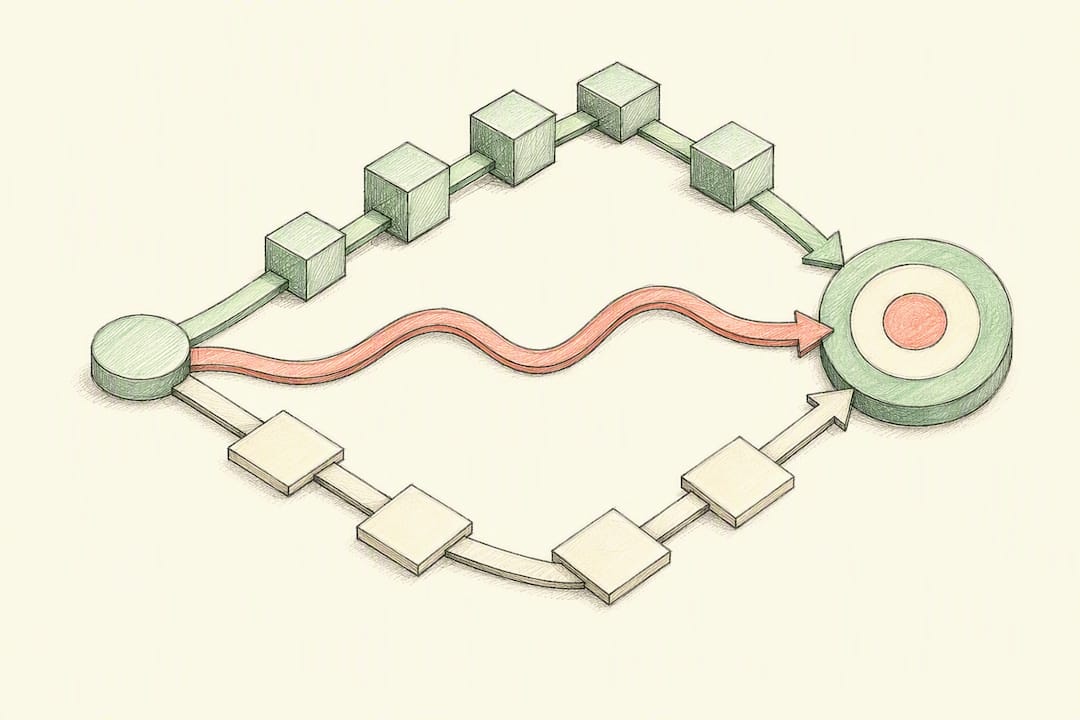
7. Multipath stages (learner choice)
Offer two or three routes through the same unit, one project-based, one written, one presentation-based, all mapped to the same learning objective. Learners pick the path that fits their strengths. This single change does more for equity than almost any other item on this list, because it stops treating every learner as identical.
8. Team guilds and cooperative challenges
Break a cohort into small permanent teams ("guilds") that complete challenges together across the course, earning shared points. Team-based mechanics support the collaboration gains the Delphi panel flagged as a top gamification benefit. Best for cohort-based courses with a live or async discussion component; weaker fit for fully self-paced solo learners.
9. Challenge sprints and hackathons
Run a short, time-boxed sprint (48 hours to one week) where learners apply several units' worth of skill to a single deliverable. This works as a capstone mechanic in technical, design, and business courses, and it doubles as a portfolio piece learners can showcase afterward.
10. Random-encounter micro-tasks
Drop small, optional bonus tasks at unpredictable points in the course, a two-minute reflection prompt, a surprise bonus quiz question, a "find the error" challenge. The unpredictability itself sustains attention in ways scheduled tasks do not. Works best in LMS environments where you can schedule content releases.
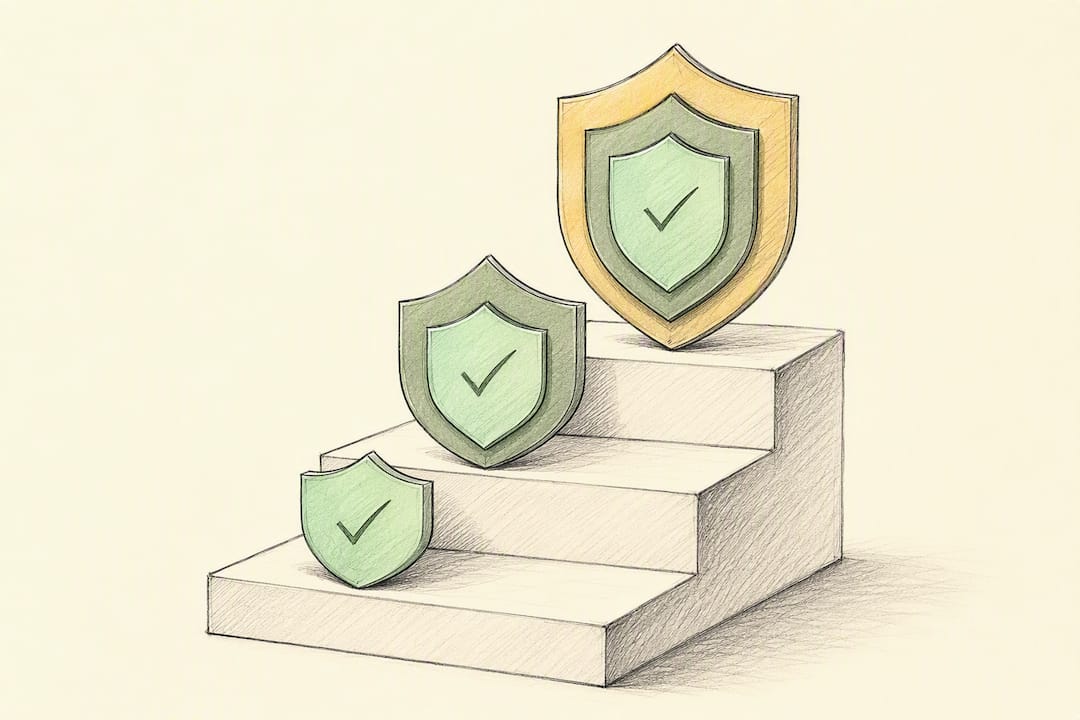
11. Stackable badges and credential ladders
Design badges that build on each other: Bronze, Silver, Gold, each requiring the previous one, each tied to a specific competency. This gives long-running courses a sense of forward motion even when the underlying content difficulty plateaus. Particularly effective in corporate training tracks with multiple certification levels.
12. Reflection achievements and showcase deliveries
Award a distinct achievement for learners who complete a structured reflection, what they learned, what surprised them, what they would do differently, and let top reflections get featured or "showcased" to the cohort (with permission). This mechanic rewards metacognition directly, something points and badges alone rarely touch.
Pro Tip: Don't launch all twelve at once. Practitioner guidance on quest design suggests rotating a minimum of five different mechanic types across a course to avoid novelty fatigue, students get bored of the same reward loop by week three just as fast as they get bored of a plain lecture.
How Do You Align Gamification With Learning Objectives?
Every mechanic on that list is worthless if it is not tied to something you actually want learners to know or do. This is the principle of constructive alignment: before you add a badge, a quest, or a leaderboard, write down the one or two learning objectives it serves. If you cannot name them, cut the mechanic.
Learner archetypes help here too. Not every student is motivated by the same lever. Some learners are driven by competition, some by collection (badges, credentials), some by narrative immersion, and some by pure mastery. A multipath course structure, letting learners choose a project route versus a written route, lets different archetypes engage with the same objective through the mechanic that actually moves them.
A few design rules keep this grounded:
- Rotate mechanics every two to three units to avoid the novelty wearing off; a minimum of five distinct quest or challenge types across a full course sustains long-term engagement better than one repeated format.
- Scaffold difficulty deliberately by unlocking harder content only after a mastery checkpoint, never by arbitrary time delay.
- Make optional pathways genuinely optional, not a maze that only advanced learners can navigate; a locked path should exist for a pedagogical reason, not a design flourish.
- Match mechanic to cognitive demand: quests for multi-step reasoning, XP for repetitive skill-building, badges for discrete competency checks.
Overreliance on extrinsic rewards carries a real risk. Meta-analytic evidence on gamified learning outcomes cautions that mechanics disconnected from genuine learning goals can undermine intrinsic motivation rather than build it. A badge for logging in five days in a row teaches nothing. A badge for demonstrating a named skill teaches everything the badge claims.
For technical or competency-heavy training, the same alignment principle applies to instructor design choices. Programs like EMS instructor training show how mapping game mechanics tightly to real competencies, not just engagement metrics, keeps gamified assessment defensible when the stakes are high.
How Do You Measure the Impact of Gamification?
Measurement is where most course gamification quietly falls apart. Educators add badges and progress bars, engagement looks good for two weeks, and then nobody checks whether mastery actually improved. Track a small, honest set of indicators instead of vanity metrics like "total points awarded."
| Metric | What it tells you | How to check it |
|---|---|---|
| Participation rate | Whether learners are showing up to gamified activities at all | Compare completion rates before and after adding a mechanic |
| Mastery checkpoint pass rate | Whether the mechanic improved actual skill, not just clicks | Track pass rate on the same assessment type pre and post |
| Time on task | Whether learners are engaging deeply or skimming for points | LMS analytics on time spent per module |
| Retention (week over week) | Whether the mechanic sustains engagement past the first two weeks | Weekly active learner count over the course duration |
| Formative mastery rate | Whether repeated low-stakes checks show improving competency | Percentage improvement across attempts on the same skill |
A simple way to convert XP into a fair grade component: assign point values to activities based on effort and importance, sum total possible XP, then convert a learner's earned XP to a percentage of that total. Run a fairness check by comparing the XP-derived grade against a traditional rubric grade for the same work on a sample of students. If the two diverge sharply, your point values need recalibrating, not your grading philosophy.
Dashboards and simple skill maps, showing which objectives a cohort has mastered versus which ones are lagging, let you tune mechanics mid-course rather than waiting for a post-mortem. If a boss-battle checkpoint shows most learners failing on the same sub-skill, that is a design signal, not a student failure.
What Technology Do You Need to Gamify a Course?
You do not need custom software to run most of the ideas above. Four broad tool categories cover nearly every use case:
- LMS-native widgets: badge and progress-bar features built into platforms like Moodle or Canvas, lowest cost, fastest to deploy
- Dedicated badge issuers: standalone credentialing tools for portable, shareable micro-credentials learners can post externally
- Mobile-native apps: matter most for cohort-based or corporate training where learners expect to check progress from a phone, not just a desktop
- Analytics dashboards: separate tools or built-in LMS reporting that surface the KPIs from the measurement section above
Before adopting any third-party tool, check three things: does it support single sign-on with your existing roster system, can you export learner data if you switch platforms later, and does it work as well on a phone as a laptop. Accessibility matters too, confirm badge images and progress visuals include text alternatives, and confirm any leaderboard or ranking display can be turned off or limited for learners who find public comparison stressful.
What Are the Common Pitfalls in Course Gamification?
Most gamification failures trace back to a handful of repeat offenders, and nearly all of them have a straightforward fix.
- Punitive grading dressed up as a game: subtracting XP for mistakes just relabels the deduction model without changing its psychology. Fix: build from zero upward, never downward.
- Public leaderboards that demotivate lower-ranked learners: full-cohort rankings tend to discourage the students who most need encouragement. Teaching-center guidance recommends a limited-range display, showing a learner only the two ranks above and below their own, to preserve competitive motivation without public shaming.
- Overreliance on extrinsic rewards: badges for attendance alone teach compliance, not skill. Fix: tie every reward to a demonstrated competency.
- One-size-fits-all pathways: forcing every learner through an identical sequence ignores different motivations and access levels. Fix: build at least two paths to the same objective.
- No private progress option: some learners disengage the moment their standing is visible to peers. Fix: default to private dashboards, with public sharing opt-in only.
Pro Tip: For learners with ADHD or attention-related access needs, favor short, frequent checkpoints over long unbroken modules, and let progress bars update in real time rather than only at the end of a unit. Immediate visible feedback matters more for this group than for almost any other design consideration on this list.
Where should course creators start with gamification?
Do not try to gamify an entire course in one pass. Pick two mechanics, a quest-based unit and a simple XP system, and run them for one module. Measure participation and one mastery checkpoint before and after. If both move in the right direction, expand. If they do not, you have lost nothing but a few hours of redesign work.
The friction usually is not the pedagogy. It is the tooling. Course creators who try to bolt badges onto one platform, dashboards onto another, and a community feed onto a third end up spending more time managing software than managing learning. Consolidating that into one place makes it far easier to actually ship a pilot module instead of getting stuck configuring integrations.
Start with a single unit. Test it with a real cohort. Then decide whether to scale it course-wide.
— Cedrik
Where Can You Host a Gamified Course Without Piecing Together Five Tools?
Most of the friction in course gamification is not creative, it is logistical. You want a progress map, a badge system, a place to sell a micro-credential, and a community where learners can compare notes, and suddenly you are paying four different vendors to make that happen. Hopper puts all four in one hub: unlimited members and products, a Library for hosting your badges and progress content, Async Sessions for one-on-one or small-group coaching between quest checkpoints, and a built-in storefront so a stackable credential ladder can actually be sold, not just displayed.

A course creator running a quest-based cohort, for instance, can post the progress map and boss-battle checkpoints inside the Library, run guild discussions in the community feed, and sell the final "Gold" micro-credential straight through the hub's storefront, all under one flat price, with loyalty pricing that lowers member costs the longer they stay enrolled. Hopper also runs natively on iOS and Android at that same flat rate, so learners checking their XP from a phone are not a paid upgrade tier.
If you are already running a course on another stack and thinking about consolidating before your next gamification pilot, Hopper's migration path moves your existing content over without a rebuild. Start with Hopper and launch your pilot module in one place instead of five.
Selected Research and Resources
The APAR framework paper lays out the Activities, Points, Achievements, Rewards structure behind most of the frameworks discussed here. The 2026 Delphi study offers expert consensus on which mechanics matter most for higher education. The systematic review on gamified AI-supported environments covers adaptive gamification in more depth, and the design-science course roadmap research offers a practical template for mapping stages to activities.
Sources
- Delphi study on gamification in higher education (Frontiers in Education, 2026)
- Level up your classroom: the low-stakes guide to gamification (VCU LEDstudio, 2026)
FAQ
What are some examples of gamified activities?
Quest-based units, XP systems replacing point deductions, mastery badges, boss-battle checkpoints, and team guild challenges are among the most-cited examples in current educational research.
How do you gamify a course for learners with ADHD?
Favor short, frequent checkpoints with real-time progress updates over long unbroken modules, since immediate visible feedback sustains attention better than delayed rewards for this group.
What are the four types of gamification?
A common structural breakdown uses Activities, Points, Achievements, and Rewards, the APAR model, though other frameworks group mechanics differently around progression, feedback, social, and reward systems.
What are good gamification tools for training courses?
LMS-native badge and progress-bar widgets, dedicated badge-issuing platforms, and mobile-friendly all-in-one hubs like Hopper each serve different needs, from quick pilots to full course-and-community hosting.
Recommended
On our list and want off? .